Engineering · 12 min read
Selecting pumps for agricultural irrigation: drip, pivot, and surface systems.
Irrigation pump selection is a different problem than municipal water. Here's how to size for the realities of farm operations, energy markets, and seasonal duty.
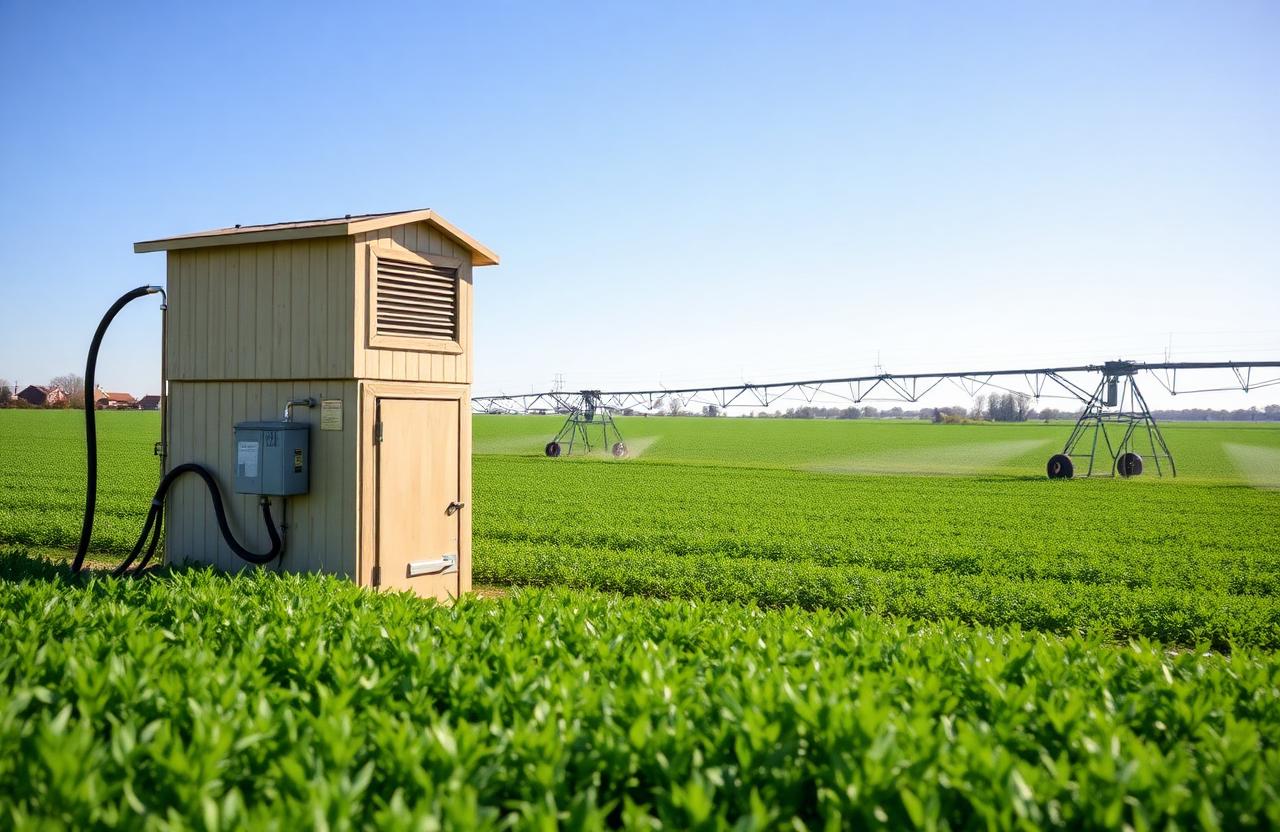
Agricultural irrigation is the largest single use of pumped water in North America, and the pumps that move it are a different animal from anything serving a city or a treatment plant. The duty cycle is seasonal, sometimes brutally so. The energy market the grower operates in is regional and sometimes punishing. The acceptable downtime during peak demand is essentially zero — a pump that fails during pivot season can lose a year's yield on a quarter section. And the customer is rarely a credentialed engineer; the operator is the grower or a ranch hand, and the pump has to work without much hand-holding.
Despite all that, irrigation pump selection still comes down to the same fundamentals as any other water pumping problem: flow, head, NPSH, efficiency, and a control strategy matched to the demand pattern. What changes is the weighting of each factor and the constraints around the answer. This article is how we approach the selection conversation with growers across the regions we serve.
Start with the irrigation method.
The irrigation method determines almost everything about the pump. A flood-irrigated alfalfa field has fundamentally different flow and pressure requirements than a high-pressure drip block of orchard, and a center pivot lives somewhere in between.
Surface irrigation (flood, furrow, border) demands high flow at low pressure — often 1,500 to 4,000 GPM at 40 to 80 feet of total dynamic head. The pump is moving water from a canal or surface source into a head ditch, with most of the pressure loss going to lift and a small amount to friction. Vertical turbine pumps and large axial-flow units dominate this market.
Center pivot systems demand moderate flow at moderate pressure — typically 600 to 1,200 GPM at 150 to 250 feet of head for a quarter-mile machine, depending on slope and end-gun configuration. The pivot machinery itself wants a stable inlet pressure, so the pump and its control strategy need to deliver consistent service across varying flow demand as zones cycle.
Drip irrigation demands modest flow at substantial pressure — often 200 to 800 GPM at 200 to 350 feet of head, with very tight tolerances on inlet pressure to the emitters. Pressure-compensating drip systems forgive some variation, but the pump still needs to deliver stable pressure under a duty cycle that changes block-by-block.
Source matters: well, surface, or pressurized supply.
Wells dictate vertical turbine or submersible pumps. Static water level, drawdown under pumping conditions, well diameter, and seasonal aquifer behavior all feed into the column length and bowl assembly. Get the static and drawdown numbers from a recent pumping test, not from the original drilling log — aquifers change over decades.
Surface sources (rivers, canals, ponds, reservoirs) open the door to horizontal end-suction or split-case pumps with much simpler maintenance access. The complications are silt, debris, and seasonal level fluctuation. A pump intake that's three feet deep in March may be one foot deep in August, and an axial-flow that's optimized for full submergence will cavitate badly when the level drops.
Pressurized supply systems (delivery from a district main, gravity from a high reservoir) sometimes need pressure-reducing rather than pressure-boosting. When pressure is needed only to fill the on-farm distribution and the source can carry the lift, a small booster sized for the friction loss is far more efficient than a full-lift pump.
Energy is half the lifecycle cost.
Across a typical 20-year service life, energy costs outweigh capital costs by a factor of three to five on most irrigation pumps. That math should drive the selection conversation, but in practice growers often optimize for first cost because the energy bill feels invisible. Don't.
Two practical numbers to put on the table. First, the cost-per-acre-foot of water delivered, which combines pump efficiency, wire-to-water efficiency, and the local electric rate into a single figure the grower can compare against alternatives (well deepening, surface storage, dry-land conversion). Second, the annualized energy cost at expected acres irrigated, which goes directly into the farm's operating budget alongside fertilizer and crop protection.
A pump selected at 75% best-efficiency-point delivery looks similar on paper to one selected at 85%, but the 10-point efficiency gap costs real money every year. Over a 20-year service life on a 200 HP pump running 1,500 hours per season, that 10-point gap is somewhere between $40,000 and $90,000 depending on the local energy market. It's worth a serious look at the curve before signing the PO.
VFDs in irrigation: useful but selectively.
VFDs earn their cost on irrigation systems with variable demand patterns. Drip systems that cycle blocks on and off are the clearest example — a VFD on the source pump can match output to whatever combination of blocks is active without wasting pressure through reducing valves.
Center pivots with end-gun cycles and corner arms also benefit, because the system's flow demand changes as the end gun cycles and the corner extends and retracts. Holding a stable inlet pressure across that variation is much easier with a drive than with throttle valves.
Surface irrigation pumps usually don't benefit. Once a field is in irrigation, demand is steady at full flow for the duration of the set. A drive adds cost and complexity for no gain.
Watch for power-quality complications in rural electrical service. Long single-phase laterals, weak utility transformers, and existing harmonic loads from other on-farm equipment can interact badly with VFDs. Plan for line reactors, output filters, and proper grounding from the beginning of the design.
Reliability under seasonal duty.
Irrigation pumps spend a few months at full duty and the rest of the year sitting idle. That duty cycle creates failure modes municipal pumps rarely see: condensation in motor windings during the off-season, seal damage from settled abrasives during long static periods, bearing damage from improper storage position, and lubricant degradation from temperature swings in unconditioned pump houses.
End-of-season decommissioning matters more than most growers realize. Drain volutes that will see freeze risk. Megger-test motor windings before storage and again before spring startup. Refill grease points with seasonal-appropriate lubricant. Rotate vertical turbine shafts a quarter turn periodically through winter to prevent bearing flat spots. Check seal-chamber drains for ice or contamination.
Pre-season startup deserves the same discipline. Cold-start a pump that's been idle for six months and you'll find every problem the off-season created at exactly the moment you need the system working. Plan a startup window two to three weeks before peak demand, with time for diagnosis and repair if something has degraded over winter.
Controls and remote monitoring.
Modern irrigation increasingly runs on cellular telemetry, soil-moisture-driven scheduling, and remote pump start/stop. Specify the pump and panel to participate in that ecosystem from the beginning rather than retrofitting later.
At minimum: pump-status feedback to a central dashboard, alarm notification to operator phones, run-hour and energy logging for benchmarking, and a remote-start capability that respects local safety interlocks. Higher-end systems integrate with variable-rate irrigation, weather forecasts, and crop modeling — but those features are only useful if the basic telemetry is reliable.
Don't overlook lightning protection. Irrigation panels sit on poles in fields and take direct hits with depressing regularity. Properly bonded ground systems, surge protection on every signal and power line entering the panel, and cellular gateways with isolated antenna grounds add a few hundred dollars to the installation and save thousands in replacement costs over the system's life.
Maintenance practices that pay off.
The best-performing irrigation operations treat their pumps as production assets and budget for them accordingly. That means annual performance testing during the off-season (capacity, efficiency, vibration baseline), planned overhaul intervals based on operating hours rather than calendar age, and spare-part stocking matched to the criticality of each station.
Standardize where possible. A farm with seven pump stations running seven different pumps from four different manufacturers is operating a maintenance nightmare. The same farm running two pump models across seven stations has a clean spare-parts list, technicians who know the equipment, and dramatically lower repair times when something fails.
And keep the data. Pump performance trends over years tell you when an asset is moving toward end-of-life, which gives you the lead time to plan a replacement during the off-season rather than discover it during the second week of cutting. The growers who run their operations on data have lower water cost per acre-foot, more reliable systems, and considerably less stress in June.