Operations · 11 min read
Where VFDs actually save energy in water systems.
Variable-frequency drives are not magic. In the right application they pay for themselves in months. In the wrong one they add complexity for nothing.
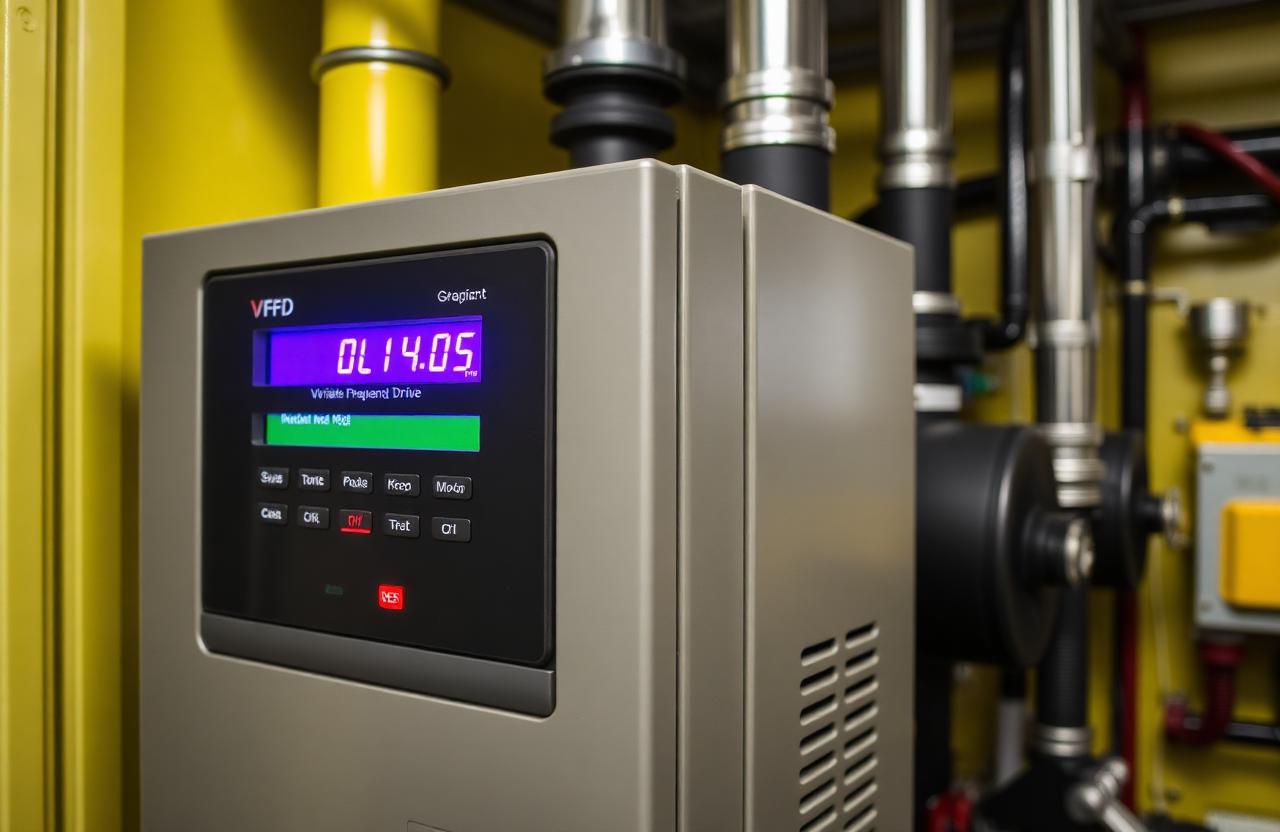
Variable-frequency drives have been the default upgrade pitch in pumping for two decades. Manufacturer literature claims 30%, 40%, even 60% energy savings versus constant-speed operation. Sometimes that's true. Often it isn't. And in some cases adding a VFD actually costs more than it saves, between drive losses, motor derating, and the new failure modes the drive itself introduces.
The frustrating thing is that the underlying physics is unambiguous. The affinity laws tell you exactly when a VFD will save energy and exactly when it won't. What gets lost in most retrofit pitches is matching that physics to the actual demand pattern of the system in front of you. This article is how to do that match honestly, and what it means for VFD decisions on real water and wastewater pumps.
The affinity laws, in plain language.
For a centrifugal pump operating in a system with no static head, the affinity laws say flow scales linearly with speed, head scales with the square of speed, and power scales with the cube of speed. That cube relationship is the heart of every VFD savings claim: drop a pump from 100% speed to 80% and theoretical power draw drops to roughly 51%.
The first asterisk is 'no static head.' Most water systems have static head — the elevation lift from suction to discharge point — that the pump has to overcome before delivering a single drop of flow. As soon as static head is in the picture, the cubic relationship breaks down. A pump on a system that's mostly static lift and very little friction loss will see almost no benefit from slowing down, because the head it has to overcome doesn't shrink with speed.
The second asterisk is 'variable demand.' Slowing a pump only saves energy when the system needs less flow at that moment. A pump running at duty point 24/7 because the system always demands its full output has nothing to save by slowing down. The savings come from matching pump output to demand that is itself variable.
Where VFDs win.
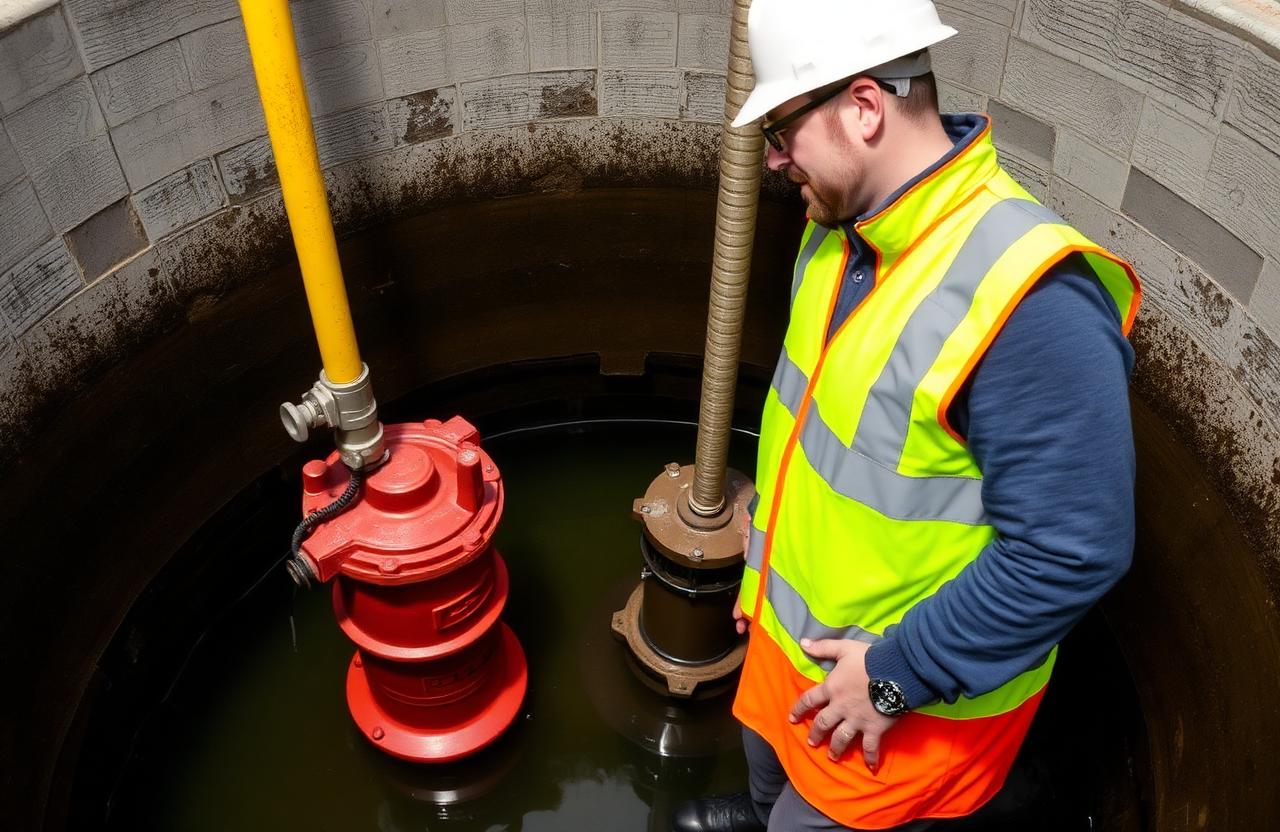
VFDs win cleanly on friction-dominated systems with strongly variable demand. The classic example is a wet-well influent pump on a wastewater plant: the head curve is mostly friction loss through the discharge line, demand fluctuates with diurnal flow patterns, and the pump spends large portions of the day at far less than peak load. VFDs on these systems typically book 25% to 40% energy savings against the prior constant-speed configuration.
Pressure-zone booster stations with diurnal demand are another strong fit. The system curve has both static and friction components, but demand swings from peak hour down to overnight base flow, and the drive earns its keep by tracking that curve instead of cycling pumps on and off all day.
Cooling water and HVAC chilled-water systems with throttling valves are nearly always a VFD candidate. The drive replaces the throttling losses with electrical savings, and payback is usually under two years.
Irrigation laterals with zone-by-zone valve sequencing benefit similarly. Each zone has a different friction loss; a VFD lets one pump match all of them efficiently instead of relying on a pressure-reducing valve that wastes the difference as heat and noise.
Where VFDs lose.
Static-head-dominant systems with steady demand are a poor fit for VFDs. A high-head transfer pump moving water uphill at full design flow 22 hours a day has very little flexibility to slow down — and what flexibility exists doesn't translate to meaningful savings because the static head dominates.
Pumps that already operate near best-efficiency-point at full speed and have minimal turndown opportunity are also poor candidates. The drive overhead — typically 3% to 5% in switching and harmonic losses — eats into any savings the cube law might have provided.
Legacy motors not rated for inverter duty are a special case. Standard-efficiency motors built before about 2000 often lack the insulation system to handle the high-frequency switching transients of a modern drive. Bearing fluting from common-mode currents and insulation breakdown from voltage spikes can shorten motor life dramatically. If the existing motor isn't inverter-rated, the retrofit cost has to include either a new motor or a properly specified output filter and shaft grounding ring.
How to actually evaluate a VFD retrofit.
Don't trust the cube law in the abstract. Pull real telemetry for at least two to four weeks: pump status, current draw, flow if metered, discharge pressure, and demand signal (level, downstream pressure, or whatever the system controls to). Plot the load duration curve — the percentage of time the pump spends at each load level.
If the curve shows the pump at full load most of the time, the VFD will not pay back. If the curve shows the pump at 60% to 90% load for large portions of the day, the VFD has real headroom to capture. The break-even rule of thumb: if the pump spends 40% or more of its operating time below 90% of best-efficiency-point flow, payback usually lands inside three years.
Then layer in the system curve. A friction-dominant curve with that demand pattern is a strong yes. A static-dominant curve with that same demand pattern is much weaker — slowing the pump doesn't drop the head it has to overcome, so the cube law doesn't apply.
Total cost of a VFD installation.
The drive itself is only part of the cost. A complete VFD retrofit on a typical medium-voltage pump usually includes: the drive itself, an inverter-duty motor or motor upgrade kit, a shaft grounding ring, an output filter (dV/dt or sine-wave depending on cable length), control system integration, harmonic mitigation if the facility has multiple drives, and the labor to install all of it.
Budget realistically. A 100 HP retrofit typically lands somewhere between $25,000 and $60,000 turnkey depending on whether the motor needs replacement and the complexity of the control integration. For that to pay back in three years, you need annual energy savings on the order of $8,000 to $20,000 — which is realistic on a friction-dominant pump running with variable demand, and unrealistic on a flat-demand transfer pump.
Operational changes that come with VFDs.
Adding a VFD changes how operators interact with the pump. Constant-speed pumps are simple: on, off, fault. VFDs introduce setpoint logic, ramp rates, minimum-speed limits, and a long list of programmable parameters that affect both performance and reliability.
The two most common operational failures we see on retrofit projects: the minimum-speed limit is set too low and the pump runs below the manufacturer's continuous operating range, leading to recirculation and impeller damage; or the PID tuning is left at factory defaults and the system hunts continuously, swinging pressure or level until operators take the loop into manual.
Plan for proper commissioning and operator training. A well-tuned VFD installation is invisible to operators in the best way. A poorly tuned one is the source of constant complaints and eventually gets bypassed.
When to retrofit vs replace.
If the existing pump is at end-of-life anyway, a full pump-and-drive replacement is often the right answer. New pump, properly matched impeller, inverter-duty motor, modern drive — sized as a system rather than bolted onto whatever the original installer chose.
If the pump is in good shape and the motor is already inverter-compatible, a drive-only retrofit can work well. The key is honest evaluation of the demand pattern. Skip the evaluation and the retrofit might not pay back in any reasonable horizon.
Done correctly, VFDs are one of the highest-ROI moves available in water and wastewater pumping. Done reflexively, they're an expensive way to add complexity to a system that didn't need it. The honest analysis takes a week. It is worth doing.